

-
1 основной обмен
1) General subject: Base-Exchange2) Biology: fasting metabolism, standard metabolism3) Medicine: basal metabolic rate, basal metabolism, resting metabolic rate, resting metabolism, basal energy expenditure (минимальное количество энергии, необходимое для обеспечения нормальной жизнедеятельности в условиях относительного физического и психического покоя)4) Chemistry: basic metabolism5) Psychology: background energy, basic energy level6) Makarov: fasting metabolism (обмен веществ, определяемый при полном покое организма натощак в ккал/сут или ккал/м час), resting metabolism (обмен веществ, определяемый при полном покое организма натощак в ккал/сут или ккал/м час), standard metabolism (обмен веществ, определяемый при полном покое организма натощак в ккал/сут или ккал/м час) -
2 уровень основного импульса
1) Sakhalin energy glossary: BIL (basic impulse level), basic impulse level2) Sakhalin R: basic impulse level (BIL)Универсальный русско-английский словарь > уровень основного импульса
-
3 основной уровень
1) Geology: datum level, datum surface, index plane (по которому строится геологический разрез), reference plane2) Naval: base level3) Military: (энергетический) ground (energy) level4) Engineering: ground level (колебательный), ground vibrational level (колебательный)5) Linguistics: basic level6) Oil: index plane7) Makarov: niveau surface -
4 схема
chart, circuit, connection, circuit design, design, device, diagram, drawing, element, ( расчетная или эквивалентная) model, net, network, outline, pattern, plan, plot, project, ( логическая структура данных) schema, schematic, scheme, setup, sheet, structure* * *схе́ма ж.1. (графическое изображение, чертёж) diagram2. ( совокупность элементов и цепей связи) circuit; (разновидность какой-л. схемы) circuit designвозбужда́ть схе́му — drive a circuitзапуска́ть схе́му — trigger a circuitподгота́вливать схе́му — arm a circuit, set up a circuit in readiness for operation… со́бран по схе́ме ё́мкостной трёхто́чки … — connected in the Hartley oscillator circuitсоставля́ть схе́му — draw (up) a circuitсуществу́ет не́сколько схем супергетероди́нного приё́мника — superhets come in several circuit designs3. (изображение, образ действия последовательность событий) scheme, planавтоди́нная схе́ма — autodyne circuitсхе́ма автомати́ческой подстро́йки частоты́ [АПЧ] — automatic frequency control [AFC] circuitанало́говая схе́ма — analog circuitсхе́ма ано́дного повтори́теля — see-saw circuitсхе́ма антисовпаде́ний — anticoincidence circuitбала́нсная схе́ма — balanced circuitсхе́ма Берну́лли ( в теории вероятностей) — Bernoulli trialsве́нтильная схе́ма — gate (circuit)схе́ма вентиля́ции — ventilation (system), ventilation planсхе́ма вентиля́ции, за́мкнутая — closed-circuit ventilation (system)схе́ма вентиля́ции, осева́я — axial ventilation (system)схе́ма вентиля́ции, протяжна́я — open-circuit ventilation (system)схе́ма вентиля́ции, радиа́льная — radial ventilation (system)схе́ма включа́ющее ИЛИ — inclusive OR circuitсхе́ма вычисле́ния — computational scheme, pattern of calculationсхе́ма вычита́ния — subtract(ion) circuitсхе́ма гаше́ния луча́ — blanking circuitгерметизи́рованная схе́ма — potted circuitгибри́дная схе́ма — hybrid circuitдвухта́ктная схе́ма — push-pull circuitдвухта́ктная схе́ма с о́бщим като́дным сопротивле́нием — long-tailed pairсхе́ма деле́ния — dividing circuitсхе́ма деле́ния на два — divide-by-two circuit, binary scalerдифференци́рующая схе́ма — differentiating circuitсхе́ма заде́ржки — delay circuitсхе́ма замеще́ния — equivalent circuitзаостря́ющая схе́ма — peaking circuitзапомина́ющая схе́ма — memory [storage] circuitсхе́ма запре́та ( логический элемент) — NOT-AND [NAND] circuit, NOT-AND [NAND] gate, inhibitor circuit, inhibit gateсхе́ма за́пуска — trigger circuitсхе́ма засве́та развё́ртки рлк. — intensifier gate circuitсхе́ма И — AND circuit, AND gateсхе́ма И-И — AND-to-AND circuitсхе́ма И-ИЛИ — AND-to-OR circuitсхе́ма ИЛИ — OR circuit, OR gateсхе́ма ИЛИ-И — OR-to-AND circuitсхе́ма ИЛИ-ИЛИ — OR-to-OR circuitи́мпульсная схе́ма — pulse circuitсхе́ма И-НЕТ — NOT-AND [NAND] circuit, NOT-AND [NAND] gateинтегра́льная схе́ма — integrated circuitпомеща́ть интегра́льную схе́му в ко́рпус — encase an integrated circuitинтегра́льная, больша́я схе́ма [БИС] — large-scale integrated [LSI] circuitинтегра́льная, гибри́дная схе́ма — hybrid integrated circuit, hybrid IC, HICинтегра́льная, моноли́тная схе́ма — monolithic integrated circuit, MICинтегра́льная, осаждё́нная схе́ма — deposited integrated circuitинтегра́льная, плана́рная эпитаксиа́льная схе́ма — planex integrated circuitинтегра́льная, полупроводнико́вая схе́ма — semiconductor integrated circuitинтегра́льная схе́ма СВЧ диапазо́на — microwave integrated circuitинтегра́льная схе́ма с инжекцио́нным возбужде́нием — integrated-injection-logic [I2 L] circuitинтегра́льная, толстоплё́ночная схе́ма — thick-film integrated circuitинтегри́рующая схе́ма — integrating circuit, integrating networkсхе́ма исключа́ющее ИЛИ — exclusive OR circuit, exclusive or [nonequivalent] elementкаско́дная схе́ма — cascode circuitквадрату́рная схе́ма — quadrature networkкинемати́ческая схе́ма — mechanical diagramкольцева́я схе́ма — ring circuitкоммутацио́нная схе́ма — diagram of connections; wiring diagramкомпоно́вочная схе́ма — lay-out diagramсхе́ма корре́кции часто́тной характери́стики — compensating networkсхе́ма корре́кции часто́тной характери́стики, проста́я — series frequency compensating networkсхе́ма корре́кции часто́тной характери́стики, сло́жная — shunt frequency compensating networkкриотро́нная схе́ма — cryotron circuitлоги́ческая схе́ма — ( материальный объект) logic(al) (circuit); ( совокупность логических элементов) logic systemстро́ить логи́ческую схе́му на ба́зе реле́ — mechanize the logic system with relaysлоги́ческая схе́ма без па́мяти — combinational logic networkлоги́ческая, дио́дная схе́ма — diode logic circuitлоги́ческая, дио́дно-транзи́сторная схе́ма — diode-transistor logic, DTLлоги́ческая, микроминиатю́рная схе́ма — micrologic circuitлоги́ческая схе́ма на магни́тных серде́чниках — core logicлоги́ческая схе́ма на параметро́нах — parametron logicсхе́ма логи́ческая схе́ма на поро́говых элеме́нтах — threshold logicлоги́ческая схе́ма на транзи́сторах и рези́сторах — resistor-transistor logicлоги́ческая, потенциа́льная схе́ма — level logicлоги́ческая, рези́сторно-транзи́сторная схе́ма — resistor-transistor logicлоги́ческая схе́ма с па́мятью — sequential logic circuit, sequential logic networkлоги́ческая, транзи́сторная схе́ма с непосре́дственными свя́зями — direct-coupled transistor logicмаке́тная схе́ма — breadboard modelма́тричная схе́ма — matrix circuitмикроминиатю́рная схе́ма — microminiature [micromin] circuitмикроэлектро́нная схе́ма — microelectronic circuitмнемони́ческая схе́ма — mimic diagramмногофункциона́льная схе́ма — multifunction circuitмодели́рующая схе́ма — analog circuitмо́дульная схе́ма — modular(ized) circuitмолекуля́рная схе́ма — molecular circuitмонта́жная схе́ма — wiring diagram, wiring lay-outмостова́я схе́ма эл. — bridge circuitсхе́ма набо́ра зада́чи, структу́рная вчт. — problem set-upнагля́дная схе́ма — pictorial diagramсхе́ма нака́чки — pump(ing) circuitсхе́ма на не́скольких криста́лликах — multichip circuitсхе́ма на не́скольких чи́пах — multichip circuitсхе́ма на то́лстых плё́нках — thick-film circuitсхе́ма на то́нких плё́нках — thin-film circuitсхе́ма на транзи́сторах — transistor circuitсхе́ма НЕ — NOT circuit, NOT gateневзаи́мная схе́ма — unilateral [nonreciprocal] networkсхе́ма НЕ И — NOT AND [NAND] circuit, NOT AND [NAND] gateсхе́ма НЕ ИЛИ — NOT OR circuit, NOT OR circuit, NOT OR gateнелине́йная схе́ма — non-linear circuit, non-linear networkсхе́ма несовпаде́ния — non-coincidence [anticoincidence] circuitсхе́ма образова́ния дополне́ния (числа́) вчт. — complementerсхе́ма образова́ния дополни́тельного ко́да (числа́) вчт. — 2's complementerсхе́ма образова́ния обра́тного ко́да (числа́) вчт. — 1's complementerсхе́ма обра́тной корре́кции радио — deemphasis circuitсхе́ма обра́тной свя́зи — feedback circuitсхе́ма объедине́ния — OR circuit, OR gateоднолине́йная схе́ма эл. — single-line diagram, single-line schemeоднота́ктная схе́ма — single-ended circuitопти́ческая схе́ма (напр. микроскопа) — optical trainпереключа́ющая схе́ма — switch(ing) [commutation] circuitпереключа́ющая схе́ма на криотро́нах — cryotron switching [commutation] circuitпересчё́тная схе́ма — scaler, scaling circuitпересчё́тная, бина́рная схе́ма — scale-of-two circuit, binary scalerпересчё́тная, дека́дная схе́ма — scale-of-ten circuit, decade scalerпересчё́тная, кольцева́я схе́ма — ring scalerпересчё́тная схе́ма с коэффицие́нтом пересчё́та — N scale-of-N circuit, modulo-N scalerпеча́тная схе́ма — printed circuitпеча́тная, микроминиатю́рная схе́ма — microprinted circuitсхе́ма пита́ния, однони́точная тепл. — single-run feeding systemсхе́ма пита́ния, паралле́льная радио — parallel feedсхе́ма пита́ния ано́дной це́пи ла́мпы, паралле́льная — parallel feed is used in the anode circuitплана́рная схе́ма — planar circuitпневмати́ческая схе́ма — pneumatic circuitсхе́ма повтори́теля ( логический элемент) — OR circuit, OR gateпоро́говая схе́ма — threshold circuitпотенциа́льная схе́ма — level circuitпринципиа́льная схе́ма1. ( изображение) schematic (diagram); (неэлектрическая, напр. механического устройства) (simplified) line diagram; ( пневматического или гидравлического устройства) flow diagram (of an apparatus)2. ( материальный объект) fundamental [basic] circuit arrangementсхе́ма прове́рки — test set-upсобра́ть схе́му прове́рки по рис. 1 — establish the test set-up shown in Fig. 1схе́ма прове́рки чё́тности — parity checkerсхе́ма произво́дственного проце́сса, маршру́тная — plant flow diagram, route sheetсхе́ма прока́тки — rolling scheduleпротивоколеба́тельная схе́ма — antihurt circuitпротивоме́стная схе́ма тлф. — antisidetone circuitсхе́ма проце́сса, технологи́ческая1. ( диаграмма) flow chart, flow sheet, flow diagram2. ( размещение производственного оборудования) plant layoutсхе́ма пупиниза́ции свз. — loading schemeпускова́я схе́ма1. тепл. start-up system2. элк. trigger circuitпускова́я, однора́зовая схе́ма элк. — single-shot trigger circuitразвя́зывающая схе́ма свз. — isolation networkсхе́ма разделе́ния — separation circuitсхе́ма разноимё́нности — exclusive OR circuit; exclusive OR [non-equivalence] elementсхе́ма распа́да физ. — decay [disintegration] schemeсхе́ма расположе́ния — lay-out diagramсхе́ма расположе́ния ламп радио — tube-location diagramсхе́ма распределе́ния па́мяти — memory allocation schemeрегенерати́вная схе́ма — regenerative [positive feedback] circuitреже́кторная схе́ма — rejector circuitрелаксацио́нная схе́ма — relaxation circuitреле́йно-конта́ктная схе́ма — (relay) switching circuitсхе́ма самолё́та, аэродинами́ческая — airplane configurationсхе́ма с двумя́ усто́йчивыми состоя́ниями — bistable circuitсхе́ма селе́кции дви́жущихся це́лей — moving target indicator [MTI] cancellerсхе́ма с заземлё́нной се́ткой — grounded-grid [common-grid] circuitсхе́ма с заземлё́нным като́дом — grounded-cathode [common-emitter] circuitсхе́ма с заземлё́нным колле́ктором — grounded-collector [common-collector] circuitсхе́ма с заземлё́нным эми́ттером — grounded-emitter [common-emitter] circuitсимметри́чная схе́ма — symmetrical circuitсхе́ма синхрониза́ции — sync(hronizing) circuitсхе́ма синхрониза́ции, гла́вная — master clockсхе́ма с като́дной свя́зью — cathode-coupled circuitскеле́тная схе́ма — skeleton diagramсхе́ма сма́зки — lubrication diagram, lubrication chartсхе́ма смеще́ния це́нтра развё́ртки — off-centring circuitсобира́тельная схе́ма — OR circuit, OR gateсхе́ма с о́бщей като́дной нагру́зкой, парафа́зная — long-tail-pair circuitсхе́ма совпаде́ния — AND [coincidence] circuit, AND gateсхе́ма с одни́м усто́йчивым состоя́нием — monostable circuitсхе́ма соедине́ний — (diagram of) connectionsсхе́ма соедине́ния трансформа́тора — winding connection(s)спускова́я схе́ма элк. — trigger circuitсхе́ма сравне́ния — comparison circuitсхе́ма с разделе́нием сигна́лов по частоте́ ( форма организации связи или системы) — frequency-division multiplex [FDM] workingстабилизи́рующая схе́ма — stabilizing circuitструкту́рная схе́ма — block diagramсумми́рующая схе́ма — ( дискретных сигналов) add(ing) circuit; ( аналоговых сигналов) summing circuitсхе́ма счё́та ( последовательность арифметических и логических операторов в алгоритме ЭВМ) — path of controlсчё́тная схе́ма — counting circuitтвердоте́льная схе́ма — solid-state circuitтвердоте́льная, эпитаксиа́льная схе́ма — epitaxial solid circuitТ-обра́зная схе́ма — T-circuit, T-networkсхе́ма токопрохожде́ния — signal-flow diagramтолстоплё́ночная схе́ма — thick-film circuitтонкоплё́ночная схе́ма — thin-film circuitтранзи́сторная схе́ма — transistor(ized) circuitсхе́ма трёхто́чки, ё́мкостная — Colpitts oscillator (circuit)схе́ма трёхто́чки, индукти́вная — Hartley oscillator (circuit)схе́ма удвое́ния — doubling circuit, doublerсхе́ма удлине́ния и́мпульсов — pulse stretcherсхе́ма умноже́ния — multiply(ing) circuitсхе́ма умноже́ния на два — multiply-by-2 circuitсхе́ма управле́ния — control circuitусредня́ющая схе́ма — averaging circuit, averagerсхе́ма фа́зовой автомати́ческой подстро́йки частоты́ [ФАПЧ] — phase-lock loop, PLLфазовраща́тельная схе́ма — phase-shifting networkфикси́рующая схе́ма — clamp(ing) circuit, clamperформиру́ющая схе́ма — shaping circuit, shaperфункциона́льная схе́ма — functional (block) diagram; вчт. logic diagramцепна́я схе́ма — ladder circuit, ladder [recurrent] networkэквивале́нтная схе́ма — equivalent circuitсхе́ма экскава́ции горн. — excavation schemeэлектри́ческая схе́ма — circuit diagramэлектро́нная схе́ма — electronic circuitсхе́ма электропрово́дки — wiring diagramсхе́ма энергети́ческих у́ровней — energy-level diagram* * *1) circuit design; 2) diagram -
5 разнесение
diversion радио, diversity, separation электрон.* * *разнесе́ние с.1. ( метод радиопередачи и приёма) diversity2. (разделение во времени, пространстве и т. п.) separation, spacingвременно́е разнесе́ние — ( метод радиопередачи и приёма) time diversity; ( разнесение выборок сигнала для осуществления метода) sample separation in time, time separation of signal samplesпри временно́м разнесе́нии испо́льзуются вы́борки сигна́ла, доста́точно разнесё́нные друг от дру́га по вре́мени — time diversity uses signal samples separated sufficiently in timeразнесе́ние мод — separation of modes, mode separation, mode spacingполяризацио́нное разнесе́ние — polarization diversityразнесе́ние по углу́ сигна́ла — angle diversityпростра́нственное разнесе́ние — ( метод радиопередачи и приёма) space diversity; ( разнесение антенн для осуществления метода) spacing of antennas, spatial separation of antennasва́жным усло́вием при испо́льзовании простра́нственного разнесе́ния явля́ется пра́вильный вы́бор разнесе́ния анте́нн — the basic requirement in space diversity is the correct choice of the spacing of the antennas in the arrayразнесе́ние ти́пов колеба́ний — separation of modes, mode separation, mode spacingчасто́тное разнесе́ние — ( метод радиопередачи и приёма) frequency diversity; ( разнесение частот для осуществления метода) frequency separationпри часто́тном разнесе́нии переда́ча одного́ сообще́ния осуществля́ется с испо́льзованием ра́зных часто́т, доста́точно разнесё́нных друг от дру́га — with frequency diversity, the desired message is transmitted at different frequencies separated enough from one anotherразнесе́ние энергети́ческих у́ровней — energy level separation* * *1) diversity; 2) separation -
6 Historical Portugal
Before Romans described western Iberia or Hispania as "Lusitania," ancient Iberians inhabited the land. Phoenician and Greek trading settlements grew up in the Tagus estuary area and nearby coasts. Beginning around 202 BCE, Romans invaded what is today southern Portugal. With Rome's defeat of Carthage, Romans proceeded to conquer and rule the western region north of the Tagus, which they named Roman "Lusitania." In the fourth century CE, as Rome's rule weakened, the area experienced yet another invasion—Germanic tribes, principally the Suevi, who eventually were Christianized. During the sixth century CE, the Suevi kingdom was superseded by yet another Germanic tribe—the Christian Visigoths.A major turning point in Portugal's history came in 711, as Muslim armies from North Africa, consisting of both Arab and Berber elements, invaded the Iberian Peninsula from across the Straits of Gibraltar. They entered what is now Portugal in 714, and proceeded to conquer most of the country except for the far north. For the next half a millennium, Islam and Muslim presence in Portugal left a significant mark upon the politics, government, language, and culture of the country.Islam, Reconquest, and Portugal Created, 714-1140The long frontier struggle between Muslim invaders and Christian communities in the north of the Iberian peninsula was called the Reconquista (Reconquest). It was during this struggle that the first dynasty of Portuguese kings (Burgundian) emerged and the independent monarchy of Portugal was established. Christian forces moved south from what is now the extreme north of Portugal and gradually defeated Muslim forces, besieging and capturing towns under Muslim sway. In the ninth century, as Christian forces slowly made their way southward, Christian elements were dominant only in the area between Minho province and the Douro River; this region became known as "territorium Portu-calense."In the 11th century, the advance of the Reconquest quickened as local Christian armies were reinforced by crusading knights from what is now France and England. Christian forces took Montemor (1034), at the Mondego River; Lamego (1058); Viseu (1058); and Coimbra (1064). In 1095, the king of Castile and Léon granted the country of "Portu-cale," what became northern Portugal, to a Burgundian count who had emigrated from France. This was the foundation of Portugal. In 1139, a descendant of this count, Afonso Henriques, proclaimed himself "King of Portugal." He was Portugal's first monarch, the "Founder," and the first of the Burgundian dynasty, which ruled until 1385.The emergence of Portugal in the 12th century as a separate monarchy in Iberia occurred before the Christian Reconquest of the peninsula. In the 1140s, the pope in Rome recognized Afonso Henriques as king of Portugal. In 1147, after a long, bloody siege, Muslim-occupied Lisbon fell to Afonso Henriques's army. Lisbon was the greatest prize of the 500-year war. Assisting this effort were English crusaders on their way to the Holy Land; the first bishop of Lisbon was an Englishman. When the Portuguese captured Faro and Silves in the Algarve province in 1248-50, the Reconquest of the extreme western portion of the Iberian peninsula was complete—significantly, more than two centuries before the Spanish crown completed the Reconquest of the eastern portion by capturing Granada in 1492.Consolidation and Independence of Burgundian Portugal, 1140-1385Two main themes of Portugal's early existence as a monarchy are the consolidation of control over the realm and the defeat of a Castil-ian threat from the east to its independence. At the end of this period came the birth of a new royal dynasty (Aviz), which prepared to carry the Christian Reconquest beyond continental Portugal across the straits of Gibraltar to North Africa. There was a variety of motives behind these developments. Portugal's independent existence was imperiled by threats from neighboring Iberian kingdoms to the north and east. Politics were dominated not only by efforts against the Muslims inPortugal (until 1250) and in nearby southern Spain (until 1492), but also by internecine warfare among the kingdoms of Castile, Léon, Aragon, and Portugal. A final comeback of Muslim forces was defeated at the battle of Salado (1340) by allied Castilian and Portuguese forces. In the emerging Kingdom of Portugal, the monarch gradually gained power over and neutralized the nobility and the Church.The historic and commonplace Portuguese saying "From Spain, neither a good wind nor a good marriage" was literally played out in diplomacy and war in the late 14th-century struggles for mastery in the peninsula. Larger, more populous Castile was pitted against smaller Portugal. Castile's Juan I intended to force a union between Castile and Portugal during this era of confusion and conflict. In late 1383, Portugal's King Fernando, the last king of the Burgundian dynasty, suddenly died prematurely at age 38, and the Master of Aviz, Portugal's most powerful nobleman, took up the cause of independence and resistance against Castile's invasion. The Master of Aviz, who became King João I of Portugal, was able to obtain foreign assistance. With the aid of English archers, Joao's armies defeated the Castilians in the crucial battle of Aljubarrota, on 14 August 1385, a victory that assured the independence of the Portuguese monarchy from its Castilian nemesis for several centuries.Aviz Dynasty and Portugal's First Overseas Empire, 1385-1580The results of the victory at Aljubarrota, much celebrated in Portugal's art and monuments, and the rise of the Aviz dynasty also helped to establish a new merchant class in Lisbon and Oporto, Portugal's second city. This group supported King João I's program of carrying the Reconquest to North Africa, since it was interested in expanding Portugal's foreign commerce and tapping into Muslim trade routes and resources in Africa. With the Reconquest against the Muslims completed in Portugal and the threat from Castile thwarted for the moment, the Aviz dynasty launched an era of overseas conquest, exploration, and trade. These efforts dominated Portugal's 15th and 16th centuries.The overseas empire and age of Discoveries began with Portugal's bold conquest in 1415 of the Moroccan city of Ceuta. One royal member of the 1415 expedition was young, 21-year-old Prince Henry, later known in history as "Prince Henry the Navigator." His part in the capture of Ceuta won Henry his knighthood and began Portugal's "Marvelous Century," during which the small kingdom was counted as a European and world power of consequence. Henry was the son of King João I and his English queen, Philippa of Lancaster, but he did not inherit the throne. Instead, he spent most of his life and his fortune, and that of the wealthy military Order of Christ, on various imperial ventures and on voyages of exploration down the African coast and into the Atlantic. While mythology has surrounded Henry's controversial role in the Discoveries, and this role has been exaggerated, there is no doubt that he played a vital part in the initiation of Portugal's first overseas empire and in encouraging exploration. He was naturally curious, had a sense of mission for Portugal, and was a strong leader. He also had wealth to expend; at least a third of the African voyages of the time were under his sponsorship. If Prince Henry himself knew little science, significant scientific advances in navigation were made in his day.What were Portugal's motives for this new imperial effort? The well-worn historical cliche of "God, Glory, and Gold" can only partly explain the motivation of a small kingdom with few natural resources and barely 1 million people, which was greatly outnumbered by the other powers it confronted. Among Portuguese objectives were the desire to exploit known North African trade routes and resources (gold, wheat, leather, weaponry, and other goods that were scarce in Iberia); the need to outflank the Muslim world in the Mediterranean by sailing around Africa, attacking Muslims en route; and the wish to ally with Christian kingdoms beyond Africa. This enterprise also involved a strategy of breaking the Venetian spice monopoly by trading directly with the East by means of discovering and exploiting a sea route around Africa to Asia. Besides the commercial motives, Portugal nurtured a strong crusading sense of Christian mission, and various classes in the kingdom saw an opportunity for fame and gain.By the time of Prince Henry's death in 1460, Portugal had gained control of the Atlantic archipelagos of the Azores and Madeiras, begun to colonize the Cape Verde Islands, failed to conquer the Canary Islands from Castile, captured various cities on Morocco's coast, and explored as far as Senegal, West Africa, down the African coast. By 1488, Bar-tolomeu Dias had rounded the Cape of Good Hope in South Africa and thereby discovered the way to the Indian Ocean.Portugal's largely coastal African empire and later its fragile Asian empire brought unexpected wealth but were purchased at a high price. Costs included wars of conquest and defense against rival powers, manning the far-flung navel and trade fleets and scattered castle-fortresses, and staffing its small but fierce armies, all of which entailed a loss of skills and population to maintain a scattered empire. Always short of capital, the monarchy became indebted to bankers. There were many defeats beginning in the 16th century at the hands of the larger imperial European monarchies (Spain, France, England, and Holland) and many attacks on Portugal and its strung-out empire. Typically, there was also the conflict that arose when a tenuously held world empire that rarely if ever paid its way demanded finance and manpower Portugal itself lacked.The first 80 years of the glorious imperial era, the golden age of Portugal's imperial power and world influence, was an African phase. During 1415-88, Portuguese navigators and explorers in small ships, some of them caravelas (caravels), explored the treacherous, disease-ridden coasts of Africa from Morocco to South Africa beyond the Cape of Good Hope. By the 1470s, the Portuguese had reached the Gulf of Guinea and, in the early 1480s, what is now Angola. Bartolomeu Dias's extraordinary voyage of 1487-88 to South Africa's coast and the edge of the Indian Ocean convinced Portugal that the best route to Asia's spices and Christians lay south, around the tip of southern Africa. Between 1488 and 1495, there was a hiatus caused in part by domestic conflict in Portugal, discussion of resources available for further conquests beyond Africa in Asia, and serious questions as to Portugal's capacity to reach beyond Africa. In 1495, King Manuel and his council decided to strike for Asia, whatever the consequences. In 1497-99, Vasco da Gama, under royal orders, made the epic two-year voyage that discovered the sea route to western India (Asia), outflanked Islam and Venice, and began Portugal's Asian empire. Within 50 years, Portugal had discovered and begun the exploitation of its largest colony, Brazil, and set up forts and trading posts from the Middle East (Aden and Ormuz), India (Calicut, Goa, etc.), Malacca, and Indonesia to Macau in China.By the 1550s, parts of its largely coastal, maritime trading post empire from Morocco to the Moluccas were under siege from various hostile forces, including Muslims, Christians, and Hindi. Although Moroccan forces expelled the Portuguese from the major coastal cities by 1550, the rival European monarchies of Castile (Spain), England, France, and later Holland began to seize portions of her undermanned, outgunned maritime empire.In 1580, Phillip II of Spain, whose mother was a Portuguese princess and who had a strong claim to the Portuguese throne, invaded Portugal, claimed the throne, and assumed control over the realm and, by extension, its African, Asian, and American empires. Phillip II filled the power vacuum that appeared in Portugal following the loss of most of Portugal's army and its young, headstrong King Sebastião in a disastrous war in Morocco. Sebastiao's death in battle (1578) and the lack of a natural heir to succeed him, as well as the weak leadership of the cardinal who briefly assumed control in Lisbon, led to a crisis that Spain's strong monarch exploited. As a result, Portugal lost its independence to Spain for a period of 60 years.Portugal under Spanish Rule, 1580-1640Despite the disastrous nature of Portugal's experience under Spanish rule, "The Babylonian Captivity" gave birth to modern Portuguese nationalism, its second overseas empire, and its modern alliance system with England. Although Spain allowed Portugal's weakened empire some autonomy, Spanish rule in Portugal became increasingly burdensome and unacceptable. Spain's ambitious imperial efforts in Europe and overseas had an impact on the Portuguese as Spain made greater and greater demands on its smaller neighbor for manpower and money. Portugal's culture underwent a controversial Castilianization, while its empire became hostage to Spain's fortunes. New rival powers England, France, and Holland attacked and took parts of Spain's empire and at the same time attacked Portugal's empire, as well as the mother country.Portugal's empire bore the consequences of being attacked by Spain's bitter enemies in what was a form of world war. Portuguese losses were heavy. By 1640, Portugal had lost most of its Moroccan cities as well as Ceylon, the Moluccas, and sections of India. With this, Portugal's Asian empire was gravely weakened. Only Goa, Damão, Diu, Bombay, Timor, and Macau remained and, in Brazil, Dutch forces occupied the northeast.On 1 December 1640, long commemorated as a national holiday, Portuguese rebels led by the duke of Braganza overthrew Spanish domination and took advantage of Spanish weakness following a more serious rebellion in Catalonia. Portugal regained independence from Spain, but at a price: dependence on foreign assistance to maintain its independence in the form of the renewal of the alliance with England.Restoration and Second Empire, 1640-1822Foreign affairs and empire dominated the restoration era and aftermath, and Portugal again briefly enjoyed greater European power and prestige. The Anglo-Portuguese Alliance was renewed and strengthened in treaties of 1642, 1654, and 1661, and Portugal's independence from Spain was underwritten by English pledges and armed assistance. In a Luso-Spanish treaty of 1668, Spain recognized Portugal's independence. Portugal's alliance with England was a marriage of convenience and necessity between two monarchies with important religious, cultural, and social differences. In return for legal, diplomatic, and trade privileges, as well as the use during war and peace of Portugal's great Lisbon harbor and colonial ports for England's navy, England pledged to protect Portugal and its scattered empire from any attack. The previously cited 17th-century alliance treaties were renewed later in the Treaty of Windsor, signed in London in 1899. On at least 10 different occasions after 1640, and during the next two centuries, England was central in helping prevent or repel foreign invasions of its ally, Portugal.Portugal's second empire (1640-1822) was largely Brazil-oriented. Portuguese colonization, exploitation of wealth, and emigration focused on Portuguese America, and imperial revenues came chiefly from Brazil. Between 1670 and 1740, Portugal's royalty and nobility grew wealthier on funds derived from Brazilian gold, diamonds, sugar, tobacco, and other crops, an enterprise supported by the Atlantic slave trade and the supply of African slave labor from West Africa and Angola. Visitors today can see where much of that wealth was invested: Portugal's rich legacy of monumental architecture. Meanwhile, the African slave trade took a toll in Angola and West Africa.In continental Portugal, absolutist monarchy dominated politics and government, and there was a struggle for position and power between the monarchy and other institutions, such as the Church and nobility. King José I's chief minister, usually known in history as the marquis of Pombal (ruled 1750-77), sharply suppressed the nobility and theChurch (including the Inquisition, now a weak institution) and expelled the Jesuits. Pombal also made an effort to reduce economic dependence on England, Portugal's oldest ally. But his successes did not last much beyond his disputed time in office.Beginning in the late 18th century, the European-wide impact of the French Revolution and the rise of Napoleon placed Portugal in a vulnerable position. With the monarchy ineffectively led by an insane queen (Maria I) and her indecisive regent son (João VI), Portugal again became the focus of foreign ambition and aggression. With England unable to provide decisive assistance in time, France—with Spain's consent—invaded Portugal in 1807. As Napoleon's army under General Junot entered Lisbon meeting no resistance, Portugal's royal family fled on a British fleet to Brazil, where it remained in exile until 1821. In the meantime, Portugal's overseas empire was again under threat. There was a power vacuum as the monarch was absent, foreign armies were present, and new political notions of liberalism and constitutional monarchy were exciting various groups of citizens.Again England came to the rescue, this time in the form of the armies of the duke of Wellington. Three successive French invasions of Portugal were defeated and expelled, and Wellington succeeded in carrying the war against Napoleon across the Portuguese frontier into Spain. The presence of the English army, the new French-born liberal ideas, and the political vacuum combined to create revolutionary conditions. The French invasions and the peninsular wars, where Portuguese armed forces played a key role, marked the beginning of a new era in politics.Liberalism and Constitutional Monarchy, 1822-1910During 1807-22, foreign invasions, war, and civil strife over conflicting political ideas gravely damaged Portugal's commerce, economy, and novice industry. The next terrible blow was the loss of Brazil in 1822, the jewel in the imperial crown. Portugal's very independence seemed to be at risk. In vain, Portugal sought to resist Brazilian independence by force, but in 1825 it formally acknowledged Brazilian independence by treaty.Portugal's slow recovery from the destructive French invasions and the "war of independence" was complicated by civil strife over the form of constitutional monarchy that best suited Portugal. After struggles over these issues between 1820 and 1834, Portugal settled somewhat uncertainly into a moderate constitutional monarchy whose constitution (Charter of 1826) lent it strong political powers to exert a moderating influence between the executive and legislative branches of the government. It also featured a new upper middle class based on land ownership and commerce; a Catholic Church that, although still important, lived with reduced privileges and property; a largely African (third) empire to which Lisbon and Oporto devoted increasing spiritual and material resources, starting with the liberal imperial plans of 1836 and 1851, and continuing with the work of institutions like the Lisbon Society of Geography (established 1875); and a mass of rural peasants whose bonds to the land weakened after 1850 and who began to immigrate in increasing numbers to Brazil and North America.Chronic military intervention in national politics began in 19th-century Portugal. Such intervention, usually commencing with coups or pronunciamentos (military revolts), was a shortcut to the spoils of political office and could reflect popular discontent as well as the power of personalities. An early example of this was the 1817 golpe (coup) attempt of General Gomes Freire against British military rule in Portugal before the return of King João VI from Brazil. Except for a more stable period from 1851 to 1880, military intervention in politics, or the threat thereof, became a feature of the constitutional monarchy's political life, and it continued into the First Republic and the subsequent Estado Novo.Beginning with the Regeneration period (1851-80), Portugal experienced greater political stability and economic progress. Military intervention in politics virtually ceased; industrialization and construction of railroads, roads, and bridges proceeded; two political parties (Regenerators and Historicals) worked out a system of rotation in power; and leading intellectuals sparked a cultural revival in several fields. In 19th-century literature, there was a new golden age led by such figures as Alexandre Herculano (historian), Eça de Queirós (novelist), Almeida Garrett (playwright and essayist), Antero de Quental (poet), and Joaquim Oliveira Martins (historian and social scientist). In its third overseas empire, Portugal attempted to replace the slave trade and slavery with legitimate economic activities; to reform the administration; and to expand Portuguese holdings beyond coastal footholds deep into the African hinterlands in West, West Central, and East Africa. After 1841, to some extent, and especially after 1870, colonial affairs, combined with intense nationalism, pressures for economic profit in Africa, sentiment for national revival, and the drift of European affairs would make or break Lisbon governments.Beginning with the political crisis that arose out of the "English Ultimatum" affair of January 1890, the monarchy became discredtted and identified with the poorly functioning government, political parties splintered, and republicanism found more supporters. Portugal participated in the "Scramble for Africa," expanding its African holdings, but failed to annex territory connecting Angola and Mozambique. A growing foreign debt and state bankruptcy as of the early 1890s damaged the constitutional monarchy's reputation, despite the efforts of King Carlos in diplomacy, the renewal of the alliance in the Windsor Treaty of 1899, and the successful if bloody colonial wars in the empire (1880-97). Republicanism proclaimed that Portugal's weak economy and poor society were due to two historic institutions: the monarchy and the Catholic Church. A republic, its stalwarts claimed, would bring greater individual liberty; efficient, if more decentralized government; and a stronger colonial program while stripping the Church of its role in both society and education.As the monarchy lost support and republicans became more aggressive, violence increased in politics. King Carlos I and his heir Luís were murdered in Lisbon by anarchist-republicans on 1 February 1908. Following a military and civil insurrection and fighting between monarchist and republican forces, on 5 October 1910, King Manuel II fled Portugal and a republic was proclaimed.First Parliamentary Republic, 1910-26Portugal's first attempt at republican government was the most unstable, turbulent parliamentary republic in the history of 20th-century Western Europe. During a little under 16 years of the republic, there were 45 governments, a number of legislatures that did not complete normal terms, military coups, and only one president who completed his four-year term in office. Portuguese society was poorly prepared for this political experiment. Among the deadly legacies of the monarchy were a huge public debt; a largely rural, apolitical, and illiterate peasant population; conflict over the causes of the country's misfortunes; and lack of experience with a pluralist, democratic system.The republic had some talented leadership but lacked popular, institutional, and economic support. The 1911 republican constitution established only a limited democracy, as only a small portion of the adult male citizenry was eligible to vote. In a country where the majority was Catholic, the republic passed harshly anticlerical laws, and its institutions and supporters persecuted both the Church and its adherents. During its brief disjointed life, the First Republic drafted important reform plans in economic, social, and educational affairs; actively promoted development in the empire; and pursued a liberal, generous foreign policy. Following British requests for Portugal's assistance in World War I, Portugal entered the war on the Allied side in March 1916 and sent armies to Flanders and Portuguese Africa. Portugal's intervention in that conflict, however, was too costly in many respects, and the ultimate failure of the republic in part may be ascribed to Portugal's World War I activities.Unfortunately for the republic, its time coincided with new threats to Portugal's African possessions: World War I, social and political demands from various classes that could not be reconciled, excessive military intervention in politics, and, in particular, the worst economic and financial crisis Portugal had experienced since the 16th and 17th centuries. After the original Portuguese Republican Party (PRP, also known as the "Democrats") splintered into three warring groups in 1912, no true multiparty system emerged. The Democrats, except for only one or two elections, held an iron monopoly of electoral power, and political corruption became a major issue. As extreme right-wing dictatorships elsewhere in Europe began to take power in Italy (1922), neighboring Spain (1923), and Greece (1925), what scant popular support remained for the republic collapsed. Backed by a right-wing coalition of landowners from Alentejo, clergy, Coimbra University faculty and students, Catholic organizations, and big business, career military officers led by General Gomes da Costa executed a coup on 28 May 1926, turned out the last republican government, and established a military government.The Estado Novo (New State), 1926-74During the military phase (1926-32) of the Estado Novo, professional military officers, largely from the army, governed and administered Portugal and held key cabinet posts, but soon discovered that the military possessed no magic formula that could readily solve the problems inherited from the First Republic. Especially during the years 1926-31, the military dictatorship, even with its political repression of republican activities and institutions (military censorship of the press, political police action, and closure of the republic's rowdy parliament), was characterized by similar weaknesses: personalism and factionalism; military coups and political instability, including civil strife and loss of life; state debt and bankruptcy; and a weak economy. "Barracks parliamentarism" was not an acceptable alternative even to the "Nightmare Republic."Led by General Óscar Carmona, who had replaced and sent into exile General Gomes da Costa, the military dictatorship turned to a civilian expert in finance and economics to break the budget impasse and bring coherence to the disorganized system. Appointed minister of finance on 27 April 1928, the Coimbra University Law School professor of economics Antônio de Oliveira Salazar (1889-1970) first reformed finance, helped balance the budget, and then turned to other concerns as he garnered extraordinary governing powers. In 1930, he was appointed interim head of another key ministry (Colonies) and within a few years had become, in effect, a civilian dictator who, with the military hierarchy's support, provided the government with coherence, a program, and a set of policies.For nearly 40 years after he was appointed the first civilian prime minister in 1932, Salazar's personality dominated the government. Unlike extreme right-wing dictators elsewhere in Europe, Salazar was directly appointed by the army but was never endorsed by a popular political party, street militia, or voter base. The scholarly, reclusive former Coimbra University professor built up what became known after 1932 as the Estado Novo ("New State"), which at the time of its overthrow by another military coup in 1974, was the longest surviving authoritarian regime in Western Europe. The system of Salazar and the largely academic and technocratic ruling group he gathered in his cabinets was based on the central bureaucracy of the state, which was supported by the president of the republic—always a senior career military officer, General Óscar Carmona (1928-51), General Craveiro Lopes (1951-58), and Admiral Américo Tómaz (1958-74)—and the complicity of various institutions. These included a rubber-stamp legislature called the National Assembly (1935-74) and a political police known under various names: PVDE (1932-45), PIDE (1945-69),and DGS (1969-74). Other defenders of the Estado Novo security were paramilitary organizations such as the National Republican Guard (GNR); the Portuguese Legion (PL); and the Portuguese Youth [Movement]. In addition to censorship of the media, theater, and books, there was political repression and a deliberate policy of depoliticization. All political parties except for the approved movement of regime loyalists, the União Nacional or (National Union), were banned.The most vigorous and more popular period of the New State was 1932-44, when the basic structures were established. Never monolithic or entirely the work of one person (Salazar), the New State was constructed with the assistance of several dozen top associates who were mainly academics from law schools, some technocrats with specialized skills, and a handful of trusted career military officers. The 1933 Constitution declared Portugal to be a "unitary, corporative Republic," and pressures to restore the monarchy were resisted. Although some of the regime's followers were fascists and pseudofascists, many more were conservative Catholics, integralists, nationalists, and monarchists of different varieties, and even some reactionary republicans. If the New State was authoritarian, it was not totalitarian and, unlike fascism in Benito Mussolini's Italy or Adolf Hitler's Germany, it usually employed the minimum of violence necessary to defeat what remained a largely fractious, incoherent opposition.With the tumultuous Second Republic and the subsequent civil war in nearby Spain, the regime felt threatened and reinforced its defenses. During what Salazar rightly perceived as a time of foreign policy crisis for Portugal (1936-45), he assumed control of the Ministry of Foreign Affairs. From there, he pursued four basic foreign policy objectives: supporting the Nationalist rebels of General Francisco Franco in the Spanish Civil War (1936-39) and concluding defense treaties with a triumphant Franco; ensuring that General Franco in an exhausted Spain did not enter World War II on the Axis side; maintaining Portuguese neutrality in World War II with a post-1942 tilt toward the Allies, including granting Britain and the United States use of bases in the Azores Islands; and preserving and protecting Portugal's Atlantic Islands and its extensive, if poor, overseas empire in Africa and Asia.During the middle years of the New State (1944-58), many key Salazar associates in government either died or resigned, and there was greater social unrest in the form of unprecedented strikes and clandestine Communist activities, intensified opposition, and new threatening international pressures on Portugal's overseas empire. During the earlier phase of the Cold War (1947-60), Portugal became a steadfast, if weak, member of the US-dominated North Atlantic Treaty Organization alliance and, in 1955, with American support, Portugal joined the United Nations (UN). Colonial affairs remained a central concern of the regime. As of 1939, Portugal was the third largest colonial power in the world and possessed territories in tropical Africa (Angola, Mozambique, Guinea-Bissau, and São Tomé and Príncipe Islands) and the remnants of its 16th-century empire in Asia (Goa, Damão, Diu, East Timor, and Macau). Beginning in the early 1950s, following the independence of India in 1947, Portugal resisted Indian pressures to decolonize Portuguese India and used police forces to discourage internal opposition in its Asian and African colonies.The later years of the New State (1958-68) witnessed the aging of the increasingly isolated but feared Salazar and new threats both at home and overseas. Although the regime easily overcame the brief oppositionist threat from rival presidential candidate General Humberto Delgado in the spring of 1958, new developments in the African and Asian empires imperiled the authoritarian system. In February 1961, oppositionists hijacked the Portuguese ocean liner Santa Maria and, in following weeks, African insurgents in northern Angola, although they failed to expel the Portuguese, gained worldwide media attention, discredited the New State, and began the 13-year colonial war. After thwarting a dissident military coup against his continued leadership, Salazar and his ruling group mobilized military repression in Angola and attempted to develop the African colonies at a faster pace in order to ensure Portuguese control. Meanwhile, the other European colonial powers (Britain, France, Belgium, and Spain) rapidly granted political independence to their African territories.At the time of Salazar's removal from power in September 1968, following a stroke, Portugal's efforts to maintain control over its colonies appeared to be successful. President Americo Tomás appointed Dr. Marcello Caetano as Salazar's successor as prime minister. While maintaining the New State's basic structures, and continuing the regime's essential colonial policy, Caetano attempted wider reforms in colonial administration and some devolution of power from Lisbon, as well as more freedom of expression in Lisbon. Still, a great deal of the budget was devoted to supporting the wars against the insurgencies in Africa. Meanwhile in Asia, Portuguese India had fallen when the Indian army invaded in December 1961. The loss of Goa was a psychological blow to the leadership of the New State, and of the Asian empire only East Timor and Macau remained.The Caetano years (1968-74) were but a hiatus between the waning Salazar era and a new regime. There was greater political freedom and rapid economic growth (5-6 percent annually to late 1973), but Caetano's government was unable to reform the old system thoroughly and refused to consider new methods either at home or in the empire. In the end, regime change came from junior officers of the professional military who organized the Armed Forces Movement (MFA) against the Caetano government. It was this group of several hundred officers, mainly in the army and navy, which engineered a largely bloodless coup in Lisbon on 25 April 1974. Their unexpected action brought down the 48-year-old New State and made possible the eventual establishment and consolidation of democratic governance in Portugal, as well as a reorientation of the country away from the Atlantic toward Europe.Revolution of Carnations, 1974-76Following successful military operations of the Armed Forces Movement against the Caetano government, Portugal experienced what became known as the "Revolution of Carnations." It so happened that during the rainy week of the military golpe, Lisbon flower shops were featuring carnations, and the revolutionaries and their supporters adopted the red carnation as the common symbol of the event, as well as of the new freedom from dictatorship. The MFA, whose leaders at first were mostly little-known majors and captains, proclaimed a three-fold program of change for the new Portugal: democracy; decolonization of the overseas empire, after ending the colonial wars; and developing a backward economy in the spirit of opportunity and equality. During the first 24 months after the coup, there was civil strife, some anarchy, and a power struggle. With the passing of the Estado Novo, public euphoria burst forth as the new provisional military government proclaimed the freedoms of speech, press, and assembly, and abolished censorship, the political police, the Portuguese Legion, Portuguese Youth, and other New State organizations, including the National Union. Scores of political parties were born and joined the senior political party, the Portuguese Community Party (PCP), and the Socialist Party (PS), founded shortly before the coup.Portugal's Revolution of Carnations went through several phases. There was an attempt to take control by radical leftists, including the PCP and its allies. This was thwarted by moderate officers in the army, as well as by the efforts of two political parties: the PS and the Social Democrats (PPD, later PSD). The first phase was from April to September 1974. Provisional president General Antonio Spínola, whose 1974 book Portugal and the Future had helped prepare public opinion for the coup, met irresistible leftist pressures. After Spinola's efforts to avoid rapid decolonization of the African empire failed, he resigned in September 1974. During the second phase, from September 1974 to March 1975, radical military officers gained control, but a coup attempt by General Spínola and his supporters in Lisbon in March 1975 failed and Spínola fled to Spain.In the third phase of the Revolution, March-November 1975, a strong leftist reaction followed. Farm workers occupied and "nationalized" 1.1 million hectares of farmland in the Alentejo province, and radical military officers in the provisional government ordered the nationalization of Portuguese banks (foreign banks were exempted), utilities, and major industries, or about 60 percent of the economic system. There were power struggles among various political parties — a total of 50 emerged—and in the streets there was civil strife among labor, military, and law enforcement groups. A constituent assembly, elected on 25 April 1975, in Portugal's first free elections since 1926, drafted a democratic constitution. The Council of the Revolution (CR), briefly a revolutionary military watchdog committee, was entrenched as part of the government under the constitution, until a later revision. During the chaotic year of 1975, about 30 persons were killed in political frays while unstable provisional governments came and went. On 25 November 1975, moderate military forces led by Colonel Ramalho Eanes, who later was twice elected president of the republic (1976 and 1981), defeated radical, leftist military groups' revolutionary conspiracies.In the meantime, Portugal's scattered overseas empire experienced a precipitous and unprepared decolonization. One by one, the former colonies were granted and accepted independence—Guinea-Bissau (September 1974), Cape Verde Islands (July 1975), and Mozambique (July 1975). Portugal offered to turn over Macau to the People's Republic of China, but the offer was refused then and later negotiations led to the establishment of a formal decolonization or hand-over date of 1999. But in two former colonies, the process of decolonization had tragic results.In Angola, decolonization negotiations were greatly complicated by the fact that there were three rival nationalist movements in a struggle for power. The January 1975 Alvor Agreement signed by Portugal and these three parties was not effectively implemented. A bloody civil war broke out in Angola in the spring of 1975 and, when Portuguese armed forces withdrew and declared that Angola was independent on 11 November 1975, the bloodshed only increased. Meanwhile, most of the white Portuguese settlers from Angola and Mozambique fled during the course of 1975. Together with African refugees, more than 600,000 of these retornados ("returned ones") went by ship and air to Portugal and thousands more to Namibia, South Africa, Brazil, Canada, and the United States.The second major decolonization disaster was in Portugal's colony of East Timor in the Indonesian archipelago. Portugal's capacity to supervise and control a peaceful transition to independence in this isolated, neglected colony was limited by the strength of giant Indonesia, distance from Lisbon, and Portugal's revolutionary disorder and inability to defend Timor. In early December 1975, before Portugal granted formal independence and as one party, FRETILIN, unilaterally declared East Timor's independence, Indonesia's armed forces invaded, conquered, and annexed East Timor. Indonesian occupation encountered East Timorese resistance, and a heavy loss of life followed. The East Timor question remained a contentious international issue in the UN, as well as in Lisbon and Jakarta, for more than 20 years following Indonesia's invasion and annexation of the former colony of Portugal. Major changes occurred, beginning in 1998, after Indonesia underwent a political revolution and allowed a referendum in East Timor to decide that territory's political future in August 1999. Most East Timorese chose independence, but Indonesian forces resisted that verdict untilUN intervention in September 1999. Following UN rule for several years, East Timor attained full independence on 20 May 2002.Consolidation of Democracy, 1976-2000After several free elections and record voter turnouts between 25 April 1975 and June 1976, civil war was averted and Portugal's second democratic republic began to stabilize. The MFA was dissolved, the military were returned to the barracks, and increasingly elected civilians took over the government of the country. The 1976 Constitution was revised several times beginning in 1982 and 1989, in order to reempha-size the principle of free enterprise in the economy while much of the large, nationalized sector was privatized. In June 1976, General Ram-alho Eanes was elected the first constitutional president of the republic (five-year term), and he appointed socialist leader Dr. Mário Soares as prime minister of the first constitutional government.From 1976 to 1985, Portugal's new system featured a weak economy and finances, labor unrest, and administrative and political instability. The difficult consolidation of democratic governance was eased in part by the strong currency and gold reserves inherited from the Estado Novo, but Lisbon seemed unable to cope with high unemployment, new debt, the complex impact of the refugees from Africa, world recession, and the agitation of political parties. Four major parties emerged from the maelstrom of 1974-75, except for the Communist Party, all newly founded. They were, from left to right, the Communists (PCP); the Socialists (PS), who managed to dominate governments and the legislature but not win a majority in the Assembly of the Republic; the Social Democrats (PSD); and the Christian Democrats (CDS). During this period, the annual growth rate was low (l-2 percent), and the nationalized sector of the economy stagnated.Enhanced economic growth, greater political stability, and more effective central government as of 1985, and especially 1987, were due to several developments. In 1977, Portugal applied for membership in the European Economic Community (EEC), now the European Union (EU) since 1993. In January 1986, with Spain, Portugal was granted membership, and economic and financial progress in the intervening years has been significantly influenced by the comparatively large investment, loans, technology, advice, and other assistance from the EEC. Low unemployment, high annual growth rates (5 percent), and moderate inflation have also been induced by the new political and administrative stability in Lisbon. Led by Prime Minister Cavaco Silva, an economist who was trained abroad, the PSD's strong organization, management, and electoral support since 1985 have assisted in encouraging economic recovery and development. In 1985, the PSD turned the PS out of office and won the general election, although they did not have an absolute majority of assembly seats. In 1986, Mário Soares was elected president of the republic, the first civilian to hold that office since the First Republic. In the elections of 1987 and 1991, however, the PSD was returned to power with clear majorities of over 50 percent of the vote.Although the PSD received 50.4 percent of the vote in the 1991 parliamentary elections and held a 42-seat majority in the Assembly of the Republic, the party began to lose public support following media revelations regarding corruption and complaints about Prime Minister Cavaco Silva's perceived arrogant leadership style. President Mário Soares voiced criticism of the PSD's seemingly untouchable majority and described a "tyranny of the majority." Economic growth slowed down. In the parliamentary elections of 1995 and the presidential election of 1996, the PSD's dominance ended for the time being. Prime Minister Antônio Guterres came to office when the PS won the October 1995 elections, and in the subsequent presidential contest, in January 1996, socialist Jorge Sampaio, the former mayor of Lisbon, was elected president of the republic, thus defeating Cavaco Silva's bid. Young and popular, Guterres moved the PS toward the center of the political spectrum. Under Guterres, the PS won the October 1999 parliamentary elections. The PS defeated the PSD but did not manage to win a clear, working majority of seats, and this made the PS dependent upon alliances with smaller parties, including the PCP.In the local elections in December 2001, the PSD's criticism of PS's heavy public spending allowed the PSD to take control of the key cities of Lisbon, Oporto, and Coimbra. Guterres resigned, and parliamentary elections were brought forward from 2004 to March 2002. The PSD won a narrow victory with 40 percent of the votes, and Jose Durão Barroso became prime minister. Having failed to win a majority of the seats in parliament forced the PSD to govern in coalition with the right-wing Popular Party (PP) led by Paulo Portas. Durão Barroso set about reducing government spending by cutting the budgets of local authorities, freezing civil service hiring, and reviving the economy by accelerating privatization of state-owned enterprises. These measures provoked a 24-hour strike by public-sector workers. Durão Barroso reacted with vows to press ahead with budget-cutting measures and imposed a wage freeze on all employees earning more than €1,000, which affected more than one-half of Portugal's work force.In June 2004, Durão Barroso was invited by Romano Prodi to succeed him as president of the European Commission. Durão Barroso accepted and resigned the prime ministership in July. Pedro Santana Lopes, the leader of the PSD, became prime minister. Already unpopular at the time of Durão Barroso's resignation, the PSD-led government became increasingly unpopular under Santana Lopes. A month-long delay in the start of the school year and confusion over his plan to cut taxes and raise public-sector salaries, eroded confidence even more. By November, Santana Lopes's government was so unpopular that President Jorge Sampaio was obliged to dissolve parliament and hold new elections, two years ahead of schedule.Parliamentary elections were held on 20 February 2005. The PS, which had promised the electorate disciplined and transparent governance, educational reform, the alleviation of poverty, and a boost in employment, won 45 percent of the vote and the majority of the seats in parliament. The leader of the PS, José Sôcrates became prime minister on 12 March 2005. In the regularly scheduled presidential elections held on 6 January 2006, the former leader of the PSD and prime minister, Aníbal Cavaco Silva, won a narrow victory and became president on 9 March 2006. With a mass protest, public teachers' strike, and street demonstrations in March 2008, Portugal's media, educational, and social systems experienced more severe pressures. With the spreading global recession beginning in September 2008, Portugal's economic and financial systems became more troubled.Owing to its geographic location on the southwestern most edge of continental Europe, Portugal has been historically in but not of Europe. Almost from the beginning of its existence in the 12th century as an independent monarchy, Portugal turned its back on Europe and oriented itself toward the Atlantic Ocean. After carving out a Christian kingdom on the western portion of the Iberian peninsula, Portuguese kings gradually built and maintained a vast seaborne global empire that became central to the way Portugal understood its individuality as a nation-state. While the creation of this empire allows Portugal to claim an unusual number of "firsts" or distinctions in world and Western history, it also retarded Portugal's economic, social, and political development. It can be reasonably argued that the Revolution of 25 April 1974 was the most decisive event in Portugal's long history because it finally ended Portugal's oceanic mission and view of itself as an imperial power. After the 1974 Revolution, Portugal turned away from its global mission and vigorously reoriented itself toward Europe. Contemporary Portugal is now both in and of Europe.The turn toward Europe began immediately after 25 April 1974. Portugal granted independence to its African colonies in 1975. It was admitted to the European Council and took the first steps toward accession to the European Economic Community (EEC) in 1976. On 28 March 1977, the Portuguese government officially applied for EEC membership. Because of Portugal's economic and social backwardness, which would require vast sums of EEC money to overcome, negotiations for membership were long and difficult. Finally, a treaty of accession was signed on 12 June 1985. Portugal officially joined the EEC (the European Union [EU] since 1993) on 1 January 1986. Since becoming a full-fledged member of the EU, Portugal has been steadily overcoming the economic and social underdevelopment caused by its imperial past and is becoming more like the rest of Europe.Membership in the EU has speeded up the structural transformation of Portugal's economy, which actually began during the Estado Novo. Investments made by the Estado Novo in Portugal's economy began to shift employment out of the agricultural sector, which, in 1950, accounted for 50 percent of Portugal's economically active population. Today, only 10 percent of the economically active population is employed in the agricultural sector (the highest among EU member states); 30 percent in the industrial sector (also the highest among EU member states); and 60 percent in the service sector (the lowest among EU member states). The economically active population numbers about 5,000,000 employed, 56 percent of whom are women. Women workers are the majority of the workforce in the agricultural and service sectors (the highest among the EU member states). The expansion of the service sector has been primarily in health care and education. Portugal has had the lowest unemployment rates among EU member states, with the overall rate never being more than 10 percent of the active population. Since joining the EU, the number of employers increased from 2.6 percent to 5.8 percent of the active population; self-employed from 16 to 19 percent; and employees from 65 to 70 percent. Twenty-six percent of the employers are women. Unemployment tends to hit younger workers in industry and transportation, women employed in domestic service, workers on short-term contracts, and poorly educated workers. Salaried workers earn only 63 percent of the EU average, and hourly workers only one-third to one-half of that earned by their EU counterparts. Despite having had the second highest growth of gross national product (GNP) per inhabitant (after Ireland) among EU member states, the above data suggest that while much has been accomplished in terms of modernizing the Portuguese economy, much remains to be done to bring Portugal's economy up to the level of the "average" EU member state.Membership in the EU has also speeded up changes in Portuguese society. Over the last 30 years, coastalization and urbanization have intensified. Fully 50 percent of Portuguese live in the coastal urban conurbations of Lisbon, Oporto, Braga, Aveiro, Coimbra, Viseu, Évora, and Faro. The Portuguese population is one of the oldest among EU member states (17.3 percent are 65 years of age or older) thanks to a considerable increase in life expectancy at birth (77.87 years for the total population, 74.6 years for men, 81.36 years for women) and one of the lowest birthrates (10.59 births/1,000) in Europe. Family size averages 2.8 persons per household, with the strict nuclear family (one or two generations) in which both parents work being typical. Common law marriages, cohabitating couples, and single-parent households are more and more common. The divorce rate has also increased. "Youth Culture" has developed. The young have their own meeting places, leisure-time activities, and nightlife (bars, clubs, and discos).All Portuguese citizens, whether they have contributed or not, have a right to an old-age pension, invalidity benefits, widowed persons' pension, as well as payments for disabilities, children, unemployment, and large families. There is a national minimum wage (€385 per month), which is low by EU standards. The rapid aging of Portugal's population has changed the ratio of contributors to pensioners to 1.7, the lowest in the EU. This has created deficits in Portugal's social security fund.The adult literacy rate is about 92 percent. Illiteracy is still found among the elderly. Although universal compulsory education up to grade 9 was achieved in 1980, only 21.2 percent of the population aged 25-64 had undergone secondary education, compared to an EU average of 65.7 percent. Portugal's higher education system currently consists of 14 state universities and 14 private universities, 15 state polytechnic institutions, one Catholic university, and one military academy. All in all, Portugal spends a greater percentage of its state budget on education than most EU member states. Despite this high level of expenditure, the troubled Portuguese education system does not perform well. Early leaving and repetition rates are among the highest among EU member states.After the Revolution of 25 April 1974, Portugal created a National Health Service, which today consists of 221 hospitals and 512 medical centers employing 33,751 doctors and 41,799 nurses. Like its education system, Portugal's medical system is inefficient. There are long waiting lists for appointments with specialists and for surgical procedures.Structural changes in Portugal's economy and society mean that social life in Portugal is not too different from that in other EU member states. A mass consumption society has been created. Televisions, telephones, refrigerators, cars, music equipment, mobile phones, and personal computers are commonplace. Sixty percent of Portuguese households possess at least one automobile, and 65 percent of Portuguese own their own home. Portuguese citizens are more aware of their legal rights than ever before. This has resulted in a trebling of the number of legal proceeding since 1960 and an eight-fold increase in the number of lawyers. In general, Portuguese society has become more permissive and secular; the Catholic Church and the armed forces are much less influential than in the past. Portugal's population is also much more culturally, religiously, and ethnically diverse, a consequence of the coming to Portugal of hundreds of thousands of immigrants, mainly from former African colonies.Portuguese are becoming more cosmopolitan and sophisticated through the impact of world media, the Internet, and the World Wide Web. A prime case in point came in the summer and early fall of 1999, with the extraordinary events in East Timor and the massive Portuguese popular responses. An internationally monitored referendum in East Timor, Portugal's former colony in the Indonesian archipelago and under Indonesian occupation from late 1975 to summer 1999, resulted in a vote of 78.5 percent for rejecting integration with Indonesia and for independence. When Indonesian prointegration gangs, aided by the Indonesian military, responded to the referendum with widespread brutality and threatened to reverse the verdict of the referendum, there was a spontaneous popular outpouring of protest in the cities and towns of Portugal. An avalanche of Portuguese e-mail fell on leaders and groups in the UN and in certain countries around the world as Portugal's diplomats, perhaps to compensate for the weak initial response to Indonesian armed aggression in 1975, called for the protection of East Timor as an independent state and for UN intervention to thwart Indonesian action. Using global communications networks, the Portuguese were able to mobilize UN and world public opinion against Indonesian actions and aided the eventual independence of East Timor on 20 May 2002.From the Revolution of 25 April 1974 until the 1990s, Portugal had a large number of political parties, one of the largest Communist parties in western Europe, frequent elections, and endemic cabinet instability. Since the 1990s, the number of political parties has been dramatically reduced and cabinet stability increased. Gradually, the Portuguese electorate has concentrated around two larger parties, the right-of-center Social Democrats (PSD) and the left-of-center Socialist (PS). In the 1980s, these two parties together garnered 65 percent of the vote and 70 percent of the seats in parliament. In 2005, these percentages had risen to 74 percent and 85 percent, respectively. In effect, Portugal is currently a two-party dominant system in which the two largest parties — PS and PSD—alternate in and out of power, not unlike the rotation of the two main political parties (the Regenerators and the Historicals) during the last decades (1850s to 1880s) of the liberal constitutional monarchy. As Portugal's democracy has consolidated, turnout rates for the eligible electorate have declined. In the 1970s, turnout was 85 percent. In Portugal's most recent parliamentary election (2005), turnout had fallen to 65 percent of the eligible electorate.Portugal has benefited greatly from membership in the EU, and whatever doubts remain about the price paid for membership, no Portuguese government in the near future can afford to sever this connection. The vast majority of Portuguese citizens see membership in the EU as a "good thing" and strongly believe that Portugal has benefited from membership. Only the Communist Party opposed membership because it reduces national sovereignty, serves the interests of capitalists not workers, and suffers from a democratic deficit. Despite the high level of support for the EU, Portuguese voters are increasingly not voting in elections for the European Parliament, however. Turnout for European Parliament elections fell from 40 percent of the eligible electorate in the 1999 elections to 38 percent in the 2004 elections.In sum, Portugal's turn toward Europe has done much to overcome its backwardness. However, despite the economic, social, and political progress made since 1986, Portugal has a long way to go before it can claim to be on a par with the level found even in Spain, much less the rest of western Europe. As Portugal struggles to move from underde-velopment, especially in the rural areas away from the coast, it must keep in mind the perils of too rapid modern development, which could damage two of its most precious assets: its scenery and environment. The growth and future prosperity of the economy will depend on the degree to which the government and the private sector will remain stewards of clean air, soil, water, and other finite resources on which the tourism industry depends and on which Portugal's world image as a unique place to visit rests. Currently, Portugal is investing heavily in renewable energy from solar, wind, and wave power in order to account for about 50 percent of its electricity needs by 2010. Portugal opened the world's largest solar power plant and the world's first commercial wave power farm in 2006.An American documentary film on Portugal produced in the 1970s described this little country as having "a Past in Search of a Future." In the years after the Revolution of 25 April 1974, it could be said that Portugal is now living in "a Present in Search of a Future." Increasingly, that future lies in Europe as an active and productive member of the EU. -
7 фотоэлектрическая установка
фотоэлектрическая установка
-
[Интент]Параллельные тексты EN-RU
Photovoltaic plants
A photovoltaic plant permits to convert the energy associated with solar irradiation into electrical energy of direct type; these plants are constituted by panels of semiconducting material, which can generate electrical power once exposed to the rays of the sun.
Photovoltaic plants can be grid-connected or supply a single load (stand alone plant).
In this last case an accumulator battery shall be present to provide power supply in case of lack of solar radiation.
The basic element of a photovoltaic plant is the photovoltaic cell constituted by semiconducting material (amorphous silicon or monocrystalline silicon); this cell, exposed to the rays of the sun, is able to supply a maximum current Impp at a maximum voltage Vmpp, which a maximum power called Wp corresponds to.
More photovoltaic cells are connected in series to form a string to raise the voltage level; by connecting more strings in parallel, the current level is increased.
For example, if a single cell can provide 5A at 35.5 Vd.c., in order to reach the level of 100A at 500 Vd.c., it is necessary to connect 20 strings in parallel, each of them constituted by 15 cells.
Generally speaking, a stand alone photovoltaic plant is constituted by the following devices:
- photovoltaic array: constituted by the photovoltaic cells suitably interconnected and used for the conversion of sunlight energy into electrical energy;
- charge regulator: it is an electronic device able to regulate charging and discharging of accumulators;
- accumulator batteries: they can provide power supply in case of lack of solar radiation;
- DC/AC inverter: it has the function of turning direct current into alternating current by controlling it and stabilizing its frequency and waveform.
The following figure shows the block diagram of a stand alone photovoltaic plant..
[ABB]Фотоэлектрические установки
Фотоэлектрические установки осуществляют прямое преобразование солнечной энергии в электрическую. Такие установки состоят из панелей полупроводникового материала, вырабатывающего электрическую энергию под воздействием солнечного излучения.
Фотоэлектрические установки являться частью общей энергосистемы или снабжать электроэнергией отдельную нагрузку (автономную установку).
В последнем случае в состав системы должна входить аккумуляторная батарея, обеспечивающая бесперебойную подачу электроэнергии в случае недостаточного солнечного излучения.
Основной частью фотоэлектрической установки являются фотоэлементы, изготовленные из полупроводникового материала (аморфного или монокристаллического кремния). При облучении солнечными лучами фотоэлемент генерирует максимальный ток Iмакс. при максимальном напряжении Uмакс, что соответствует максимальной мощности Wмакс..
Для увеличения выходного напряжения несколько фотоэлементов соединяют последовательно в ряд. Для увеличения тока несколько рядов соединяют параллельно.
Так, например, если один фотоэлемент может произвести ток 5 А при напряжении 35,5 В пост. тока, то для получения источника электроэнергии с током 100 А при напряжении 500 В пост. тока требуется соединить параллельно 20 рядов по 15 фотоэлементов в каждом.
Обычно автономная фотоэлектрическая установка состоит из следующих устройств:
- фотоэлектрическая батарея: состоит из соединенных между собой фотоэлементов, преобразующих солнечную энергию в электрическую;
- регулятор заряда: электронное устройство, предназначенное для регулирования заряда и разряда аккумуляторов;
- аккумуляторная батарея: обеспечивает электропитание нагрузки при недостаточном солнечном излучении.
- инвертор: преобразует постоянный ток в переменный ток стабильной частоты и формы.
На следующем рисунке показана функциональная схема автономной фотоэлектрической установки
[Перевод Интент]Русско-английский словарь нормативно-технической терминологии > фотоэлектрическая установка
8 volumen
m.1 volume.subir/bajar el volumen to turn up/down the volumesube el volumen que no te oímos speak up, please, we can't hear youa todo volumen at full volume2 volume (commerce & finance).volumen de negocio o ventas turnover3 size, bulk (espacio ocupado).ocupa poco volumen it doesn't take up a lot of spaceel sofá tiene un volumen excesivo para la habitación the sofa is too big for the room4 volume (libro).5 tome, volume.6 loudness, level of sound, volume.7 sum.* * *1 (gen) volume2 (tamaño) size\bajar el volumen / subir el volumen to turn the volume down / turn the volume upde mucho volumen sizeable, importantvolumen de negocios turnover* * *noun m.1) volume2) amount3) size* * *SM(pl volúmenes)1) [de cuerpo] volumecajas de gran volumen — large o bulky boxes
2) [de sonido] volume3) (Com) volumevolumen de negocios, volumen de operaciones — turnover
4) (=tomo) volume5) [de cabello] body* * *1)a) ( de un cuerpo) volumeb) (magnitud, cantidad) volumevolumen de ventas — volume of sales, turnover
2) ( de sonido) volumebajar/subir el volumen — to turn the volume down/up
a todo volumen — on full volume, at full blast (colloq)
3) ( tomo) volume* * *1)a) ( de un cuerpo) volumeb) (magnitud, cantidad) volumevolumen de ventas — volume of sales, turnover
2) ( de sonido) volumebajar/subir el volumen — to turn the volume down/up
a todo volumen — on full volume, at full blast (colloq)
3) ( tomo) volume* * *volumen11 = volume.Ex: Projection is really a matter of energy rather than volume, and the energy comes from the diaphragm, which propels the breath like stones from a catapult so that the words are lobbed from speaker to listeners.
* a todo volumen = at full blast.* control de volumen = volume controller, volume control.* subir el volumen = pump up + the volume.volumen22 = bulk, corpus [corpora, -pl.], size.Ex: The sheer bulk of the headings and the complexity of references structures is sufficient to confirm that a more systematic approach might prove fruitful.
Ex: I would be inclined to go one step further and treat the entire corpus of an author's writings as his/her work.Ex: The height of a book is of minor importance, except in that it indicates the overall size of the text.* un gran volumen de = a vast corpus of.* volumen de agua = volume of water.* volumen de negocios = turnover, stock turnover, turnover of stock.* volumen de ventas = turnover, stock turnover, turnover of stock.volumen33 = item, vol. (volume), volume.Nota: Obra, parte de ella o conjunto de ellas comprendidas en una sola encuadernación.Ex: The basic phisical unit which is used in the handling, storage and retrieval of archives is termed an item.
Ex: He has published Malay Manuscripts, a Bibliographic Guide and Main Entry for Serials in the LC Information Bulletin, vol. 33, no. 47 (November 22, 1974).Ex: Either option (1) or (2) above may be used as the basic sequence for bound volumes of periodicals.* colección en varios volúmenes = multivolume set.* de dos volúmenes = two-volume.* de millones de volúmenes = million-volume.* de un único volumen = single-volume.* de un volumen = one-volume.* en dos volúmenes = two-volume.* en un volumen = one-volume.* en varios volúmenes = multi-volume [multivolume].* monografía en varios volúmenes = multi-part item, multi-volume monograph.* número de volumen = volume number.* obra en varios volúmenes = multi-volume work.* volumen acumulativo = cumulation.* volumen anterior = back volume.* volumen conmemorativo = Festschrift [Festschriften, -pl.], commemorative volume, memorial volume.* volúmenes anteriores = backset.* * *A1 [ Vocabulary notes (Spanish) ] (de un cuerpo) volumevolumen molecular molecular volumebultos de ese volumen pieces of luggage that size o as large as that2 (magnitud, cantidad) volumevolumen de trabajo workflowvolumen de ventas volume of sales, turnoverB (de sonido) volumebajar/subir el volumen to turn the volume down/uppor favor, baja el volumen de ese televisor turn that television down pleasela radio está puesta a todo volumen the radio is on full volume o ( colloq) at full blastC (tomo) volumeun diccionario en dos volúmenes a two-volume dictionary, a dictionary in two volumes* * *
volumen sustantivo masculino
1 ( en general) volume;
bajar/subir el volumen to turn the volume down/up;
a todo volumen on full volume, at full blast (colloq)
2 ( tomo) volume
volumen sustantivo masculino
1 (magnitud, capacidad) volume
2 (sonido) volume: sube el volumen, turn the volume up
3 (de una enciclopedia, etc) volume
' volumen' also found in these entries:
Spanish:
bajar
- bulto
- condicionar
- facturación
- fuerte
- inferior
- subir
- vol.
- ajustar
- alto
- aumentar
- bajo
- botón
- cantidad
- facturar
English:
blare out I
- blast
- blast out
- body
- bulk
- low
- lower
- turn up
- volume
- volume control
- cubic
- rise
- sale
- turn
- up
- work
* * *volumen nm1. [nivel, cantidad] volumeEcon volumen de contratación trading volume;volumen de negocio turnover;volumen de ventas turnover2. [de sonido] volume;subir/bajar el volumen to turn up/down the volume;sube el volumen que no te oímos speak up, please, we can't hear you;a todo volumen at full volume3. [espacio ocupado] size, bulk;ocupa poco volumen it doesn't take up a lot of space;el sofá tiene un volumen excesivo para la habitación the sofa is too big for the room4. [tomo] volume* * *m volume;a todo volumen at full volume o blast;en tres volúmenes diccionario three-volume atr* * *1) tomo: volume, book2) : capacity, size, bulk3) cantidad: amountel volumen de ventas: the volume of sales4) : volume, loudness* * *volumen n volume9 общий
1) General subject: aggregate (aggregate membership - общее число членов), all round, all-round, blanket, broad, collective, combined, common, community, conjoint, encyclical, g, general, generic, generical, in common, joint, mutual, net, nett, overall, (в сложных словах имеет значение) pan, public, total, vulgar, whole, corporate, global2) Medicine: constitutional, systemic3) Military: uniform4) Construction: cumulative6) Railway term: lax7) Accounting: single8) Finances: lump-sum9) Politics: overarching10) Psychology: catholic, corporational, schematic11) Abbreviation: comm13) Information technology: communal, generalized, shared15) Atomic energy: everyone's16) Metrology: integral, integrated17) Business: crude, united, high-level (о показателях)18) Sakhalin energy glossary: o/all19) Network technologies: sharable20) Robots: lumped21) Makarov: all-up, basic( problems), common (общего пользования), community (об учреждении и т.п.), constitutional (о заболевании), general (не частный), grand, lump, miscellaneous22) Logistics: allover10 означать
•The term thermodynamics implies a study of the flow of heat.
•This sharp enhancement signalled the existence of a new kind of quark.
•Such a low level does not necessarily mean (or signify) that...
•These bands signify the presence of a vinyl group.
•Equation (.2) implies that...
•For ligands of rather similar type an increase in ligand basic strength implies an increase in its metal-chelating ability.
•Bonding also refers to the fastening together of two prices by means of adhesives.
II•denotes mobility.
•() stands for the input.
•In this paper "mining" will be taken to mean "coal mining".
•signifies the concentration of...
•Here, represents the radiant energy density.
Русско-английский научно-технический словарь переводчика > означать
11 поисковые исследования
1) Naval: explorary research2) Military: basic research4) Geophysics: appraisal survey, prospect-level survey5) Atomic energy: pilot studies6) Makarov: researchУниверсальный русско-английский словарь > поисковые исследования
12 НКУ распределения и управления
- switchgear/controlgear
- switchgear and controlgear
- switchboard
- PSC-assembly
- power switchgear and controlgear assembly
- panel
- LV switchgear assembly
- LV switchgear and controlgear assembly
- low-voltage switchgear and controlgear assembly
- low voltage switchgear and controlgear assembly
- low voltage switchboard
- low voltage controlgear and assembly
- electrical switchboard
- assembly
низковольтное устройство распределения и управления (НКУ)
Низковольтные коммутационные аппараты и устройства управления, измерения, сигнализации, защиты, регулирования, собранные совместно, со всеми внутренними электрическими и механическими соединениями и конструктивными элементами.
[ ГОСТ Р МЭК 61439-1-2012]
низковольтное устройство распределения и управления
Комбинация низковольтных коммутационных аппаратов с устройствами управления, измерения, сигнализации, защиты, регулирования и т. п., полностью смонтированных изготовителем НКУ (под его ответственность на единой конструктивной основе) со всеми внутренними электрическими и механическими соединениями с соответствующими конструктивными элементами
Примечания
1. В настоящем стандарте сокращение НКУ используют для обозначения низковольтных комплектных устройств распределения и управления.
2. Аппараты, входящие в состав НКУ, могут быть электромеханическими или электронными.
3. По различным причинам, например по условиям транспортирования или изготовления, некоторые операции сборки могут быть выполнены на месте установки, вне предприятия-изготовителя.
[ ГОСТ Р 51321. 1-2000 ( МЭК 60439-1-92)]EN
power switchgear and controlgear assembly (PSC-assembly)
low-voltage switchgear and controlgear assembly used to distribute and control energy for all types of loads, intended for industrial, commercial and similar applications where operation by ordinary persons is not intended
[IEC 61439-2, ed. 1.0 (2009-01)]
low-voltage switchgear and controlgear assembly
combination of one or more low-voltage switching devices together with associated control, measuring, signalling, protective, regulation equipment, etc., completely assembled under the responsibility of the manufacturer with all the internal electrical and mechanical interconnections and structural parts.
[IEC 61892-3, ed. 2.0 (2007-11)]
switchgear and controlgear
a general term covering switching devices and their combination with associated control, measuring, protective and regulating equipment, also assemblies of such devices and equipment with associated interconnections, accessories, enclosures and supporting structures
[IEV number 441-11-01]
switchgear and controlgear
electric equipment intended to be connected to an electric circuit for the purpose of carrying out one or more of the following functions: protection, control, isolation, switching
NOTE – The French and English terms can be considered as equivalent in most cases. However, the French term has a broader meaning than the English term and includes for example connecting devices, plugs and socket-outlets, etc. In English, these latter devices are known as accessories.
[IEV number 826-16-03 ]
switchboard
A large single electric control panel, frame, or assembly of panels on which are mounted (either on the back or on the face, or both) switches, overcurrent and other protective devices, buses, and usually instruments; not intended for installation in a cabinet but may be completely enclosed in metal; usually is accessible from both the front and rear.
[ McGraw-Hill Dictionary of Architecture & Construction]
switchboard
One or more panels accommodating control switches, indicators, and other apparatus for operating electric circuits
[ The American Heritage Dictionary of the English Language]FR
ensemble d'appareillage de puissance (ensemble PSC)
ensemble d'appareillage à basse tension utilisé pour répartir et commander l'énergie pour tous les types de charges et prévu pour des applications industrielles, commerciales et analogues dans lesquelles l'exploitation par des personnes ordinaires n'est pas prévue
[IEC 61439-2, ed. 1.0 (2009-01)]
appareillage, m
matériel électrique destiné à être relié à un circuit électrique en vue d'assurer une ou plusieurs des fonctions suivantes: protection, commande, sectionnement, connexion
NOTE – Les termes français et anglais peuvent être considérés comme équivalents dans la plupart des cas. Toutefois, le terme français couvre un domaine plus étendu que le terme anglais, et comprend notamment les dispositifs de connexion, les prises de courant, etc. En anglais, ces derniers sont dénommés "accessories".
[IEV number 826-16-03 ]
appareillage
terme général applicable aux appareils de connexion et à leur combinaison avec des appareils de commande, de mesure, de protection et de réglage qui leur sont associés, ainsi qu'aux ensembles de tels appareils avec les connexions, les accessoires, les enveloppes et les charpentes correspondantes
[IEV number 441-11-01]
A switchboard as defined in the National Electrical Code is a large single panel, frame, or assembly of panels on which are mounted, on the face or back or both switches, overcurrent and other protective devices, buses, and, usually, instruments.
Switchboards are generally accessible from the rear as well as from the front and are not intended to be installed in cabinets.
The types of switchboards, classified by basic features of construction, are as follows:
1. Live-front vertical panels
2. Dead-front boards
3. Safety enclosed boards( metal-clad)
[American electricians’ handbook]
The switchboard plays an essential role in the availability of electric power, while meeting the needs of personal and property safety.
Its definition, design and installation are based on precise rules; there is no place for improvisation.
The IEC 61439 standard aims to better define " low-voltage switchgear and controlgear assemblies", ensuring that the specified performances are reached.
It specifies in particular:
> the responsibilities of each player, distinguishing those of the original equipment manufacturer - the organization that performed the original design and associated verification of an assembly in accordance with the standard, and of the assembly manufacturer - the organization taking responsibility for the finished assembly;
> the design and verification rules, constituting a benchmark for product certification.
All the component parts of the electrical switchboard are concerned by the IEC 61439 standard.
Equipment produced in accordance with the requirements of this switchboard standard ensures the safety and reliability of the installation.
A switchboard must comply with the requirements of standard IEC 61439-1 and 2 to guarantee the safety and reliability of the installation.
Managers of installations, fully aware of the professional and legal liabilities weighing on their company and on themselves, demand a high level of safety for the electrical installation.
What is more, the serious economic consequences of prolonged halts in production mean that the electrical switchboard must provide excellent continuity of service, whatever the operating conditions.
[Schneider Electric]НКУ играет главную роль в обеспечении электроэнергией, удовлетворяя при этом всем требованиям по безопасности людей и сохранности имущества.
Выбор конструкции, проектирование и монтаж основаны на чётких правилах, не допускающих никакой импровизации.
Требования к низковольтным комплектным устройствам распределения и управления сформулированы в стандарте МЭК 61439 (ГОСТ Р 51321. 1-2000).
В частности, он определяет:
> распределение ответственности между изготовителем НКУ - организацией, разработавшей конструкцию НКУ и проверившей его на соответствие требованиям стандарта, и сборщиком – организацией, выполнившей сборку НКУ;
> конструкцию, технические характеристики, виды и методы испытаний НКУ.
В стандарте МЭК 61439 (ГОСТ Р 51321. 1-2000) описываются все компоненты НКУ.
Оборудование, изготовленное в соответствии с требованиями этого стандарта, обеспечивает безопасность и надежность электроустановки.
Для того чтобы гарантировать безопасность эксплуатации и надежность работы электроустановки, распределительный щит должен соответствовать требованиям стандарта МЭК 61439-1 и 2.
Лица, ответственные за электроустановки, должны быть полностью осведомлены о профессиональной и юридической ответственности, возложенной на их компанию и на них лично, за обеспечение высокого уровня безопасности эксплуатации этих электроустановок.
Кроме того, поскольку длительные перерывы производства приводят к серьезным экономическим последствиям, электрический распределительный щит должен обеспечивать надежную и бесперебойную работу независимо от условий эксплуатации.
[Перевод Интент]LV switchgear assemblies are undoubtedly the components of the electric installation more subject to the direct intervention of personnel (operations, maintenance, etc.) and for this reason users demand from them higher and higher safety requirements.
The compliance of an assembly with the state of the art and therefore, presumptively, with the relevant technical Standard, cannot be based only on the fact that the components which constitute it comply with the state of the art and therefore, at least presumptively, with the relevant technical standards.
In other words, the whole assembly must be designed, built and tested in compliance with the state of the art.
Since the assemblies under consideration are low voltage equipment, their rated voltage shall not exceed 1000 Va.c. or 1500 Vd.c. As regards currents, neither upper nor lower limits are provided in the application field of this Standard.
The Standard IEC 60439-1 states the construction, safety and maintenance requirements for low voltage switchgear and controlgear assemblies, without dealing with the functional aspects which remain a competence of the designer of the plant for which the assembly is intended.
[ABB]Низковольтные комплектные устройства (НКУ), вне всякого сомнения, являются частями электроустановок, которые наиболее подвержены непосредственному вмешательству оперативного, обслуживающего и т. п. персонала. Вот почему требования потребителей к безопасности НКУ становятся все выше и выше.
Соответствие НКУ современному положению дел и вследствие этого, гипотетически, соответствующим техническим стандартам, не может основываться только на том факте, что составляющие НКУ компоненты соответствуют современному состоянию дел и поэтому, по крайней мере, гипотетически, - соответствующим техническим стандартам
Другими словами, НКУ должно быть разработано, изготовлено и испытано в соответствии с современными требованиями.
Мы рассматриваем низковольтные комплектные устройства и это означает, что их номинальное напряжение не превышает 1000 В переменного тока или 1500 В постоянного тока. Что касается тока, то ни верхнее, ни нижнее значение стандартами, относящимися к данной области, не оговариваются
Стандарт МЭК 60439-1 устанавливает требования к конструкции, безопасности и техническому обслуживанию низковольтных комплектных устройств без учета их функций, полагая, что функции НКУ являются компетенцией проектировщиков электроустановки, частью которых эти НКУ являются.
[Перевод Интент]Тематики
- НКУ (шкафы, пульты,...)
Классификация
>>>Действия
Синонимы
Сопутствующие термины
EN
- assembly
- electrical switchboard
- low voltage controlgear and assembly
- low voltage switchboard
- low voltage switchgear and controlgear assembly
- low-voltage switchgear and controlgear assembly
- LV switchgear and controlgear assembly
- LV switchgear assembly
- panel
- power switchgear and controlgear assembly
- PSC-assembly
- switchboard
- switchgear and controlgear
- switchgear/controlgear
DE
- Schaltanlagen und/oder Schaltgeräte
FR
Русско-английский словарь нормативно-технической терминологии > НКУ распределения и управления
См. также в других словарях:
normal energy level — basic level of energy … English contemporary dictionary
Energy — This article is about the scalar physical quantity. For other uses, see Energy (disambiguation). Energetic redirects here. For other uses, see Energetic (disambiguation) … Wikipedia
energy — /en euhr jee/, n., pl. energies. 1. the capacity for vigorous activity; available power: I eat chocolate to get quick energy. 2. an adequate or abundant amount of such power: I seem to have no energy these days. 3. Often, energies. a feeling of… … Universalium
Level sensor — Level sensors are used to detect liquid level. The liquid to be measured can be inside a container or can be in its natural form (e.g. a river or a lake). The level measurement can be either continuous or point values. Continuous level sensors… … Wikipedia
Energy policy of the United States — The energy policy of the United States is determined by federal, state and local public entities in the United States, which address issues of energy production, distribution, and consumption, such as building codes and gas mileage standards.… … Wikipedia
energy conversion — ▪ technology Introduction the transformation of energy from forms provided by nature to forms that can be used by humans. Over the centuries a wide array of devices and systems has been developed for this purpose. Some of these energy … Universalium
Energy carrier — An energy carrier is a substance or phenomenon that can be used to produce mechanical work or heat or to operate chemical or physical processes (ISO 13600).It is any system or substance that contains energy for conversion as usable energy later… … Wikipedia
Energy development — Schematic of the global sources of energy in 2006 2007 … Wikipedia
level — {{Roman}}I.{{/Roman}} noun 1 amount/size/number ADJECTIVE ▪ elevated, high, significant, substantial ▪ record ▪ Industrial output has reached record levels. ▪ … Collocations dictionary
Energy in Saudi Arabia — Map of Saudi Arabia Energy in Saudi Arabia describes energy and electricity production, consumption and export in Saudi Arabia. Saudi Arabia is one of the world s largest energy producers, pumping approximately 10.782 million barrels per day… … Wikipedia
Energy policy of Canada — Canada is the 5th largest producer of energy in the world, producing about 6% of global energy supplies. It is the world s largest producer of natural uranium, producing one third of global supply, and is also the world s leading producer of… … Wikipedia
Перевод: со всех языков на английский
с английского на все языки- С английского на:
- Все языки
- Со всех языков на:
- Все языки
- Английский
- Немецкий
- Русский
- Украинский
- Французский
basic energy level
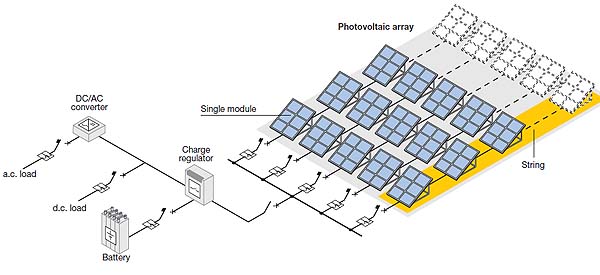

18+
© Академик, 2000-2026
- Обратная связь: Техподдержка, Реклама на сайте
Экспорт словарей на сайты, сделанные на PHP, Joomla, Drupal, WordPress, MODx.